The Early Bronze Age Kekova shipwreck
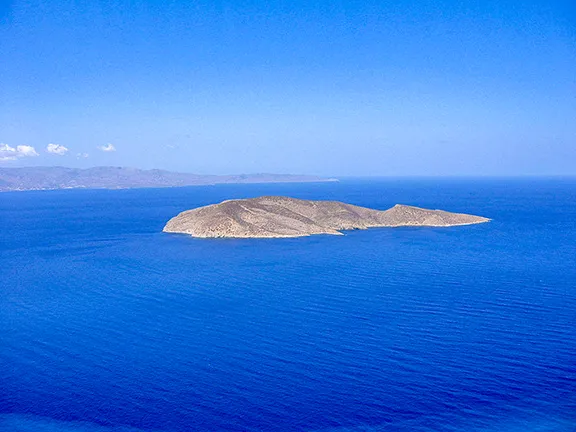
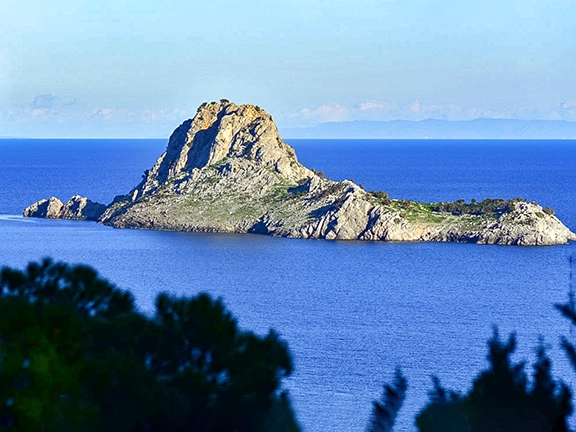
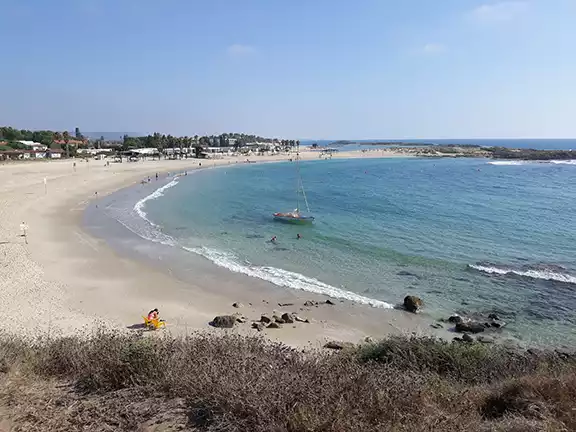
When a wooden ship sinks, the Mediterranean Sea rarely preserves the hull. Marine organisms quickly devour the timber. What remains is the cargo. Off the southern coast of Turkey [Türkiye], near Kekova Island, archaeologists have uncovered an extraordinary puzzle lying 30 metres below the waves.
Dating to the Early Bronze Age (EBA), between 4,400 and 4,700 years ago, this newly discovered wreck, or, more accurately, wreck site, may well be the oldest ever found. Because the wooden framework vanished millennia ago, we cannot study the ship itself. Instead, we must read the ceramic amphorae (large transport jars) scattered across the seabed like pages in a submerged ledger. Whilst the popular press concentrate on the sensational discovery of the ‘oldest’ wreck known to date, the most fascinating aspect of this discovery is an exploration into what the wreck was carrying, where the cargo originated, its likely destination and how that information expands our knowledge of the maritime trade routes of the early Bronze Age.
Discovering the EBA Kekova Shipwreck
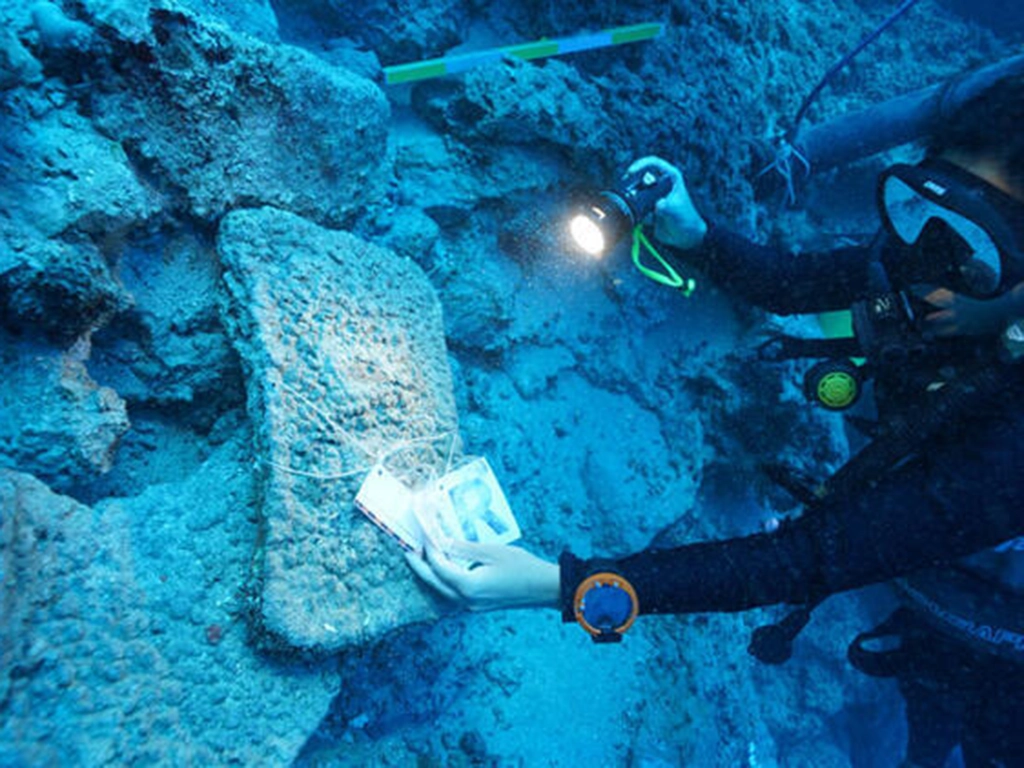
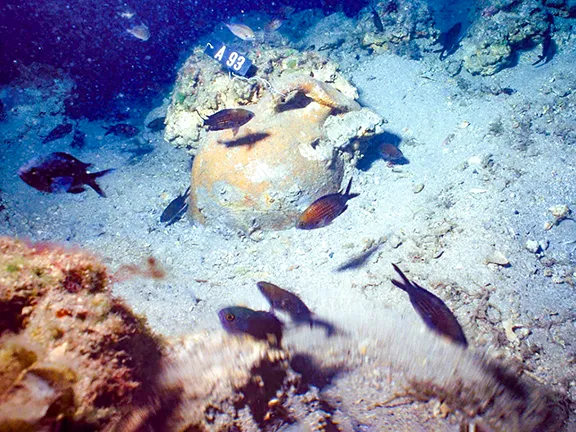
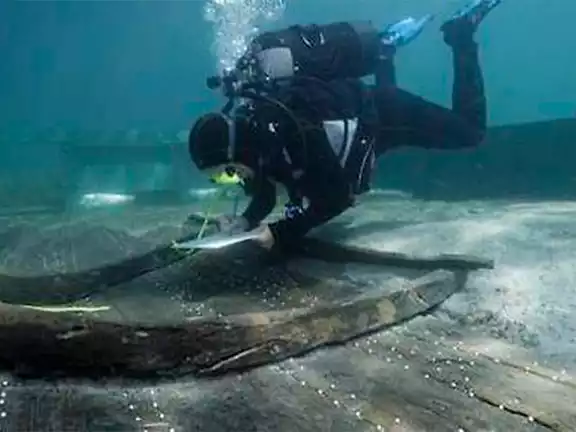
Researchers first identified the wreck site in 2024. During a routine underwater survey of the Demre district in Antalya province, scientists spotted unnatural shapes scattered across a steep underwater slope. Resting at a depth of roughly 30 metres, the seabed revealed an anomalous scatter of ceramic fragments covering a 500-square-metre area. These fragments eventually proved to be transport jars from the third millennium BCE.
The Discovery Team
The credit for this landmark discovery belongs to a dedicated Turkish scientific team.
The Lead Investigator is Dr Hakan Öniz, a prominent maritime archaeologist from Akdeniz University, who serves as the scientific director of the research programme. The Mediterranean Archaeology Association provided crucial logistical backing, deploying their specialised UPL research vessel to map the seabed whilst the Antalya Museum officially oversees the site under the explicit permission of Türkiye's Ministry of Culture and Tourism.
From Survey to Excavation: 2026
Finding an ancient wreck is merely the first piece of the puzzle; recovering its data is the true challenge. Following the initial 2024 discovery, the team spent two years preparing for a full-scale intervention. In 2026, the Kekova site became one of the primary excavation targets for Turkish underwater archaeological campaigns.
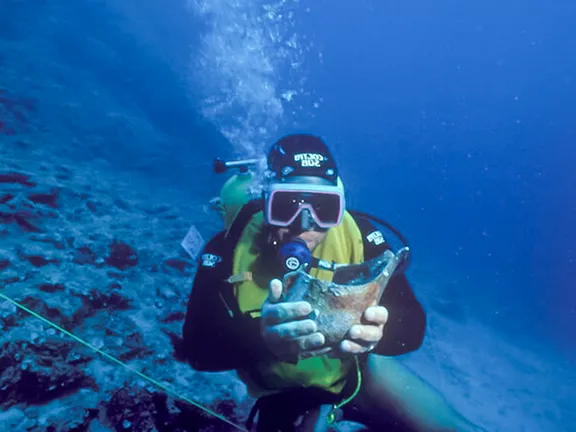
Working on a sheer 30-degree marine incline, divers meticulously documented the flat-based amphorae and massive stone anchors in situ (in their original resting place) before raising select vessels to the surface. On 14 October 2026, Mehmet Nuri Ersoy, the Minister of Culture and Tourism, finally announced the astonishing 4,700-year-old find to the global public. Through rigorous survey and careful extraction, Öniz and his team have pulled the earliest known maritime trade route out from the deep.
Typology and Origins of the EBA Kekova Shipwreck
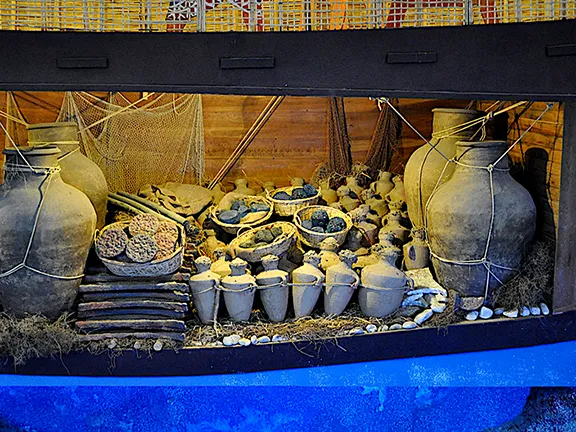
Without wood for radiocarbon dating, researchers rely heavily on typology (the classification of objects by their physical characteristics) to date the site. The Kekova cargo includes more than 30 amphorae alongside three massive stone anchors.
These storage jars feature flat bases, distinctive central ridges, and two heavy side handles. This specific profile perfectly matches Early Bronze Age ceramics from the Levant (the eastern Mediterranean coast).
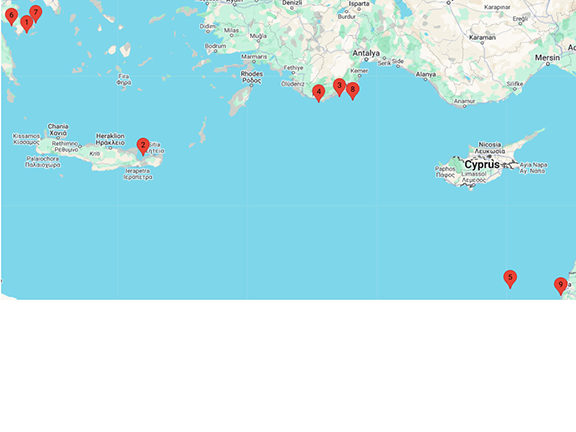
Recent clay analysis suggests potters originally crafted these vessels in Jordan Valley workshops. This points to an interconnected exchange network functioning long before the famous Late Bronze Age globalised economy (Öniz et al., 2026). The crew likely loaded these wares in the Levant and hugged the Anatolian coastline, heading towards major trading hubs like Troy [Hisarlık] or Crete.
The Residue Puzzle: What Were They Carrying?
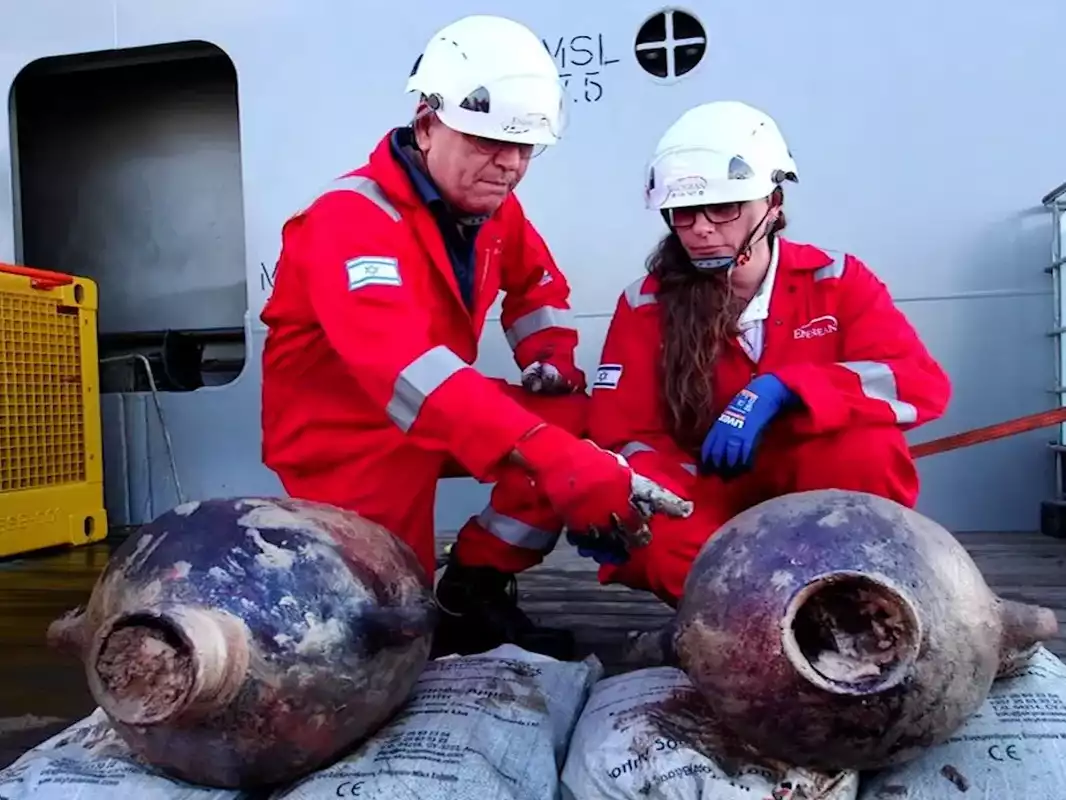
The physical jars only tell half the story. The true treasure lies within. When researchers brought two jars to the surface, they discovered a thick, glossy residue coating the interiors.
Australian archaeologist Dr Karin Sowada examined the deposits. She was amazed at the volume of surviving organic material (Sowada, 2026). This dark sludge offers tantalising clues about Early Bronze Age commodity trade:
- The residue likely represents premium agricultural products, such as ancient olive oil or wine.
- It could also be tree resin, a crucial preservative and aromatic used widely across the ancient world.
- These jars were not single-use containers. Merchants emptied and reused them repeatedly over many years, creating complex layers of residue on the ceramic walls (Sowada, 2026).
One jar in particular featured two parallel scratched lines and a zigzag pattern running across its middle. These markings likely denoted the vessel's specific contents, volume, or owner, acting as a Bronze Age shipping label.
How Large Were the Jars?
Because this discovery is so fresh, the excavation team has not yet published the precise metric dimensions or volumetric capacities of the Kekova storage jars. However, the physical mechanics of ancient maritime transport offer us a clear picture of their scale.
We know they were large and robust enough to endure the manual loading processes of Early Bronze Age dockworkers. Dr Hakan Öniz specifically noted the heavy nature of these jars, prompting his team to marvel at the sheer physical labour required to haul them aboard a 10-metre wooden ship.
While we await the final laboratory reports from Akdeniz University, we can look to established ceramic typologies (the classification of standard pottery shapes). Levantine storage jars from this era typically stand between 30 and 55 centimetres high, with larger pithoi (massive stationary storage jars) exceeding 70 centimetres. The Kekova amphorae likely fall into the heavy mid-sized transport category, balancing maximum liquid capacity with a weight a single stevedore could actually lift.
A Glimpse of Life Aboard the Kekova Ship: The Churn Jar
One specific artefact breaks the standard transport mould and offers a glimpse into daily maritime survival. Archaeologists identified a unique vessel featuring two deliberate holes and nine distinct markings. Experts interpret this anomaly as a maritime churn jar.
Sailors likely used this vessel to agitate milk from onboard livestock, such as goats. By churning the milk, they could produce fresh cheese or butter during their voyages.
What was the size of the Kekova ship and the crew?
When archaeologists mapped the Kekova site, they found a scatter zone (the seabed area covered by wreckage) spanning roughly 500 square metres. However, this expansive footprint is a geological illusion. The ship originally sank onto a steep, 30-degree marine incline. Over 4,700 years, gravity and underwater currents dragged the heavy cargo downwards. Experts analysed the actual volume of the surviving cargo, comprising roughly 30 amphorae and three stone anchors. Based on these dimensions, they estimate the wooden hull measured between 10 and 15 metres in length (Öniz et al., 2026). It was a compact, highly functional coastal freighter.
On such a modest vessel, cargo dictated everything. Every spare metre belonged to the valuable Levantine jars, leaving little room for human passengers. Historians suggest a minimal crew of only three to six skilled mariners managed the entire voyage.
Was the EBA Kekova Ship Driven by Sail?
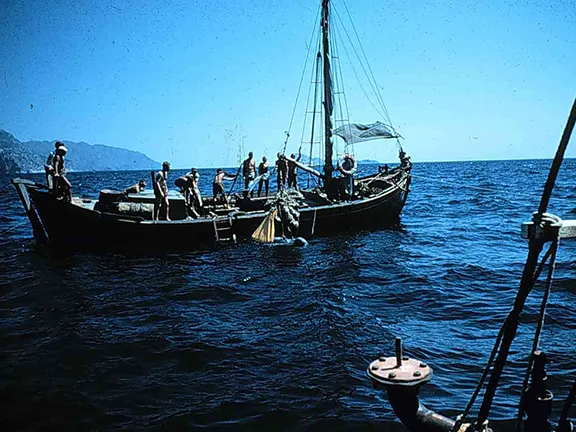
The propulsion of the Kekova ship presents a fascinating technological paradox. In the nearby Aegean Sea during the Early Bronze Age, mariners relied entirely on human muscle. Incised carvings on Cycladic 'frying pans' (terracotta ceremonial disks) from this period depict sleek, low-slung longboats. Dozens of paddlers drove these narrow vessels, which completely lacked masts (Broodbank, 2000).
However, the Kekova vessel was not a lightweight Aegean racer. It carried heavy, flat-based bulk storage jars manufactured in the Jordan Valley. The ship also hauled three large stone anchors. This heavy cargo required a deep, rounded hull. Such heavy merchant ships point directly to the older maritime traditions of the Levant and Egypt. There, merchants used primitive square sails on A-frame masts as early as 3200 BCE (Wachsmann, 1998).
Archaeologists therefore suspect the Kekova ship operated as a technological hybrid. Its builders almost certainly equipped it with a primitive Levantine sail to catch favourable following winds. As this heavy freighter pushed westward along the jagged Anatolian coast, the sail frequently became a liability. The ancient crew probably dropped the mast and manned the oars to survive the treacherous, winding straits (Öniz et al., 2026).
References and Further Reading
Broodbank, C. (2000). An Island Archaeology of the Early Cyclades. Cambridge University Press.
ECOticias (2026). Divers off Turkey's Kekova Island found a shipwreck. ECOticias.
Küre Encyclopedia (2026). Kekova Early Bronze Age Wreck. KÜRE Encyclopedia.
Öniz, H., et al. (2026). Preliminary Report on the Early Bronze Age Shipwreck at Kekova. Journal of Maritime Archaeology.
Scott, A. (2026). A 4,700-Year-Old Shipwreck Hailed as the World's Oldest May Have Carried Goats and Been Bound for Troy. Discover Magazine.
Sowada, K. (2026). Analysis of Ceramic Residues from the Kekova Shipwreck. Macquarie University Archaeological Reports.
Wachsmann, S. (1998). Seagoing Ships and Seamanship in the Bronze Age Levant. Texas A&M University Press.